The AI Readiness Gap: Why Most Organizations Are Building on Foundations That Cannot Support What They Are Deploying
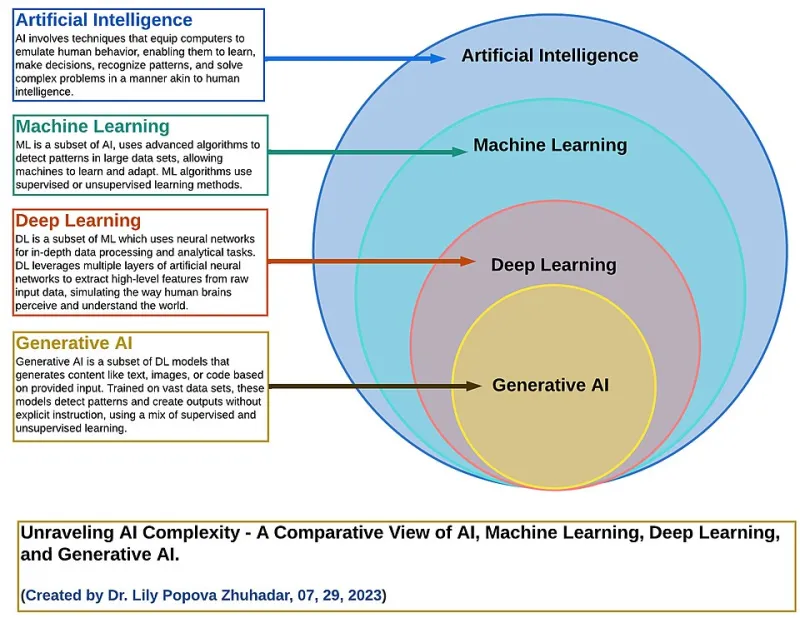
Photo: PopovaZhuhadar, CC BY-SA 4.0, via Wikimedia Commons
The Promise Arrives Before the Foundation Is Ready
The pitch for artificial intelligence is compelling, and the business pressure to act on it is real. Boards want roadmaps. Competitors are announcing pilots. Vendors are offering implementation packages that promise measurable ROI within ninety days. In this environment, the temptation to move quickly is understandable.
But speed without preparation is not acceleration. It is a different kind of risk — one that rarely shows up in vendor proposals.
Across industries, a consistent pattern has emerged in AI deployment failures: the technology itself performs as designed, but the organizational and technical environment surrounding it is insufficiently mature to sustain a production deployment. Data pipelines are inconsistent. Governance structures are undefined. The infrastructure that was adequate for reporting and analytics buckles under the real-time demands of machine learning workloads.
The result is a project that appears to succeed in a proof-of-concept environment and quietly collapses when it meets the complexity of actual operations.
What the Failure Statistics Actually Tell Us
Research from multiple sources consistently estimates that between 80 and 85 percent of AI and machine learning projects either fail to reach production or fail to deliver their intended value once deployed. These numbers are frequently cited in technology circles, but the underlying causes are less often examined with precision.
The most common factors are not technical in the narrow sense. They are infrastructural and organizational. Poor data quality. Inconsistent labeling practices. The absence of model monitoring after deployment. Insufficient integration between AI outputs and the business processes those outputs are supposed to inform. A lack of internal expertise to maintain systems that were built by external vendors.
In other words, most AI failures are not AI failures. They are readiness failures.
A Cautionary Pattern: The Automation That Couldn't Scale
One illustrative scenario involves a regional logistics company that invested substantially in a machine learning model designed to optimize delivery routing in real time. The proof-of-concept, conducted over six weeks with a curated dataset, produced impressive efficiency gains. The organization moved quickly to full deployment.
Within four months, the initiative was suspended. The production environment exposed problems that the pilot had not: data feeds from dispatch systems were inconsistently formatted, the model had been trained on historical data that did not reflect current operational patterns, and there was no mechanism in place to detect when the model's predictions began to drift from reality. Routing decisions degraded gradually, and by the time the problem was diagnosed, the cost in operational disruption exceeded the projected savings by a significant margin.
The technology was sound. The foundation was not.
The Three-Stage Readiness Framework
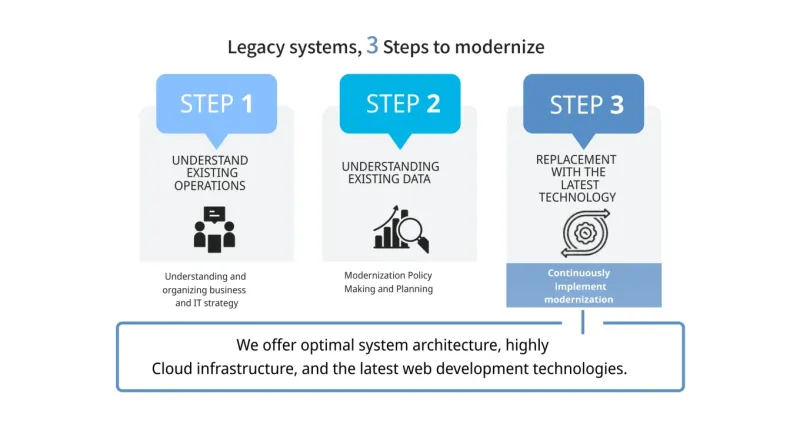
Avoiding this outcome requires a structured assessment before any AI initiative moves beyond the conceptual phase. The following framework, refined through enterprise technology practice, organizes that assessment into three sequential stages.
Stage One: Data Infrastructure Maturity
Artificial intelligence is only as reliable as the data it consumes. Before evaluating any AI use case, organizations must conduct an honest audit of their data environment across four dimensions.
Data quality and consistency. Are the relevant data sources accurate, complete, and consistently formatted? Are there known gaps, duplications, or legacy records that have not been standardized? A model trained on inconsistent data will produce inconsistent outputs.
Data accessibility and integration. Can the data required for the intended use case be reliably accessed by the systems that will power the AI application? Many organizations discover at this stage that the data they need exists but is locked in siloed systems that were never designed to interoperate.
Data governance and lineage. Is there a documented understanding of where data originates, how it is transformed, and who is responsible for its quality? Without governance infrastructure, debugging model failures becomes an investigative exercise rather than a systematic process.
Data volume and historical depth. Most supervised learning approaches require substantial historical data to produce reliable predictions. Organizations with limited data histories or recent system migrations may not yet have the training material necessary to support the use cases they are considering.
Stage Two: Systems and Architecture Readiness
Even organizations with mature data practices must evaluate whether their broader technology architecture can support AI workloads in production.
Machine learning inference — the process of applying a trained model to new data — can impose significant computational demands, particularly in real-time or near-real-time applications. Legacy infrastructure that was designed for batch processing and scheduled reporting is frequently inadequate for these requirements.
Organizations should assess their current capacity for low-latency data processing, their ability to scale infrastructure dynamically in response to demand, the maturity of their API and integration layers, and the robustness of their monitoring and alerting capabilities. This last point is particularly important: AI systems require ongoing monitoring not just for uptime but for model performance degradation over time.
Stage Three: Organizational and Operational Readiness
Technology readiness alone is insufficient. The organizational conditions that determine whether an AI deployment succeeds or fails are often overlooked until a project is already in trouble.
Key questions at this stage include: Does the organization have internal expertise to maintain and retrain models after the vendor engagement concludes? Are the business processes that will consume AI outputs designed to act on those outputs effectively? Is there executive alignment on what success looks like, and on what the organization will do when the model produces an unexpected result?
Change management is not a soft consideration. It is a technical dependency.
A Diagnostic Checklist Before You Proceed
Organizations evaluating an AI initiative can use the following questions as a rapid diagnostic:
- Can you identify the specific data sources required for this use case, and confirm their quality and accessibility today?
- Do you have documented data governance policies and a designated owner for data quality?
- Has your infrastructure been evaluated for the computational and latency requirements of production AI workloads?
- Is there a plan for monitoring model performance after deployment, including defined thresholds for intervention?
- Does your team have the internal capability to maintain this system independently, or is there a documented plan for building that capability?
- Are the business stakeholders who will act on AI outputs aligned on how those outputs will be used and what their limitations are?
If the honest answer to more than two of these questions is uncertain or negative, the organization is not yet ready to deploy. That is not a failure. It is useful information — and acting on it early is substantially less expensive than acting on it after a failed deployment.
The Strategic Value of Slowing Down
In technology, the organizations that build durable competitive advantages through AI are rarely the ones that moved fastest. They are the ones that built correctly. A technology readiness audit is not a delay tactic. It is an investment in deployment success — and in the credibility of every AI initiative that follows.